Bai Co Chay Da Nang – A Tranquil Space by the Han River

The Da Nang Museum of Cham Sculpture is renowned as one of the most significant cultural destinations in the coastal city, attracting thousands of visitors annually to admire the treasure trove of ancient Champa art. In the following article, tourvietnambest will help you gain a deeper understanding of this famous museum and its immense value.
The Museum of Cham Sculpture is located at No. 2, 2/9 Street, Binh Hien Ward, Hai Chau District, in a highly convenient spot directly opposite the Vietnam Television Center and just about 100 meters from the Dragon Bridge. Visitors can easily access it from the city’s administrative center, Da Nang International Airport, or My Khe Beach via major city roads.
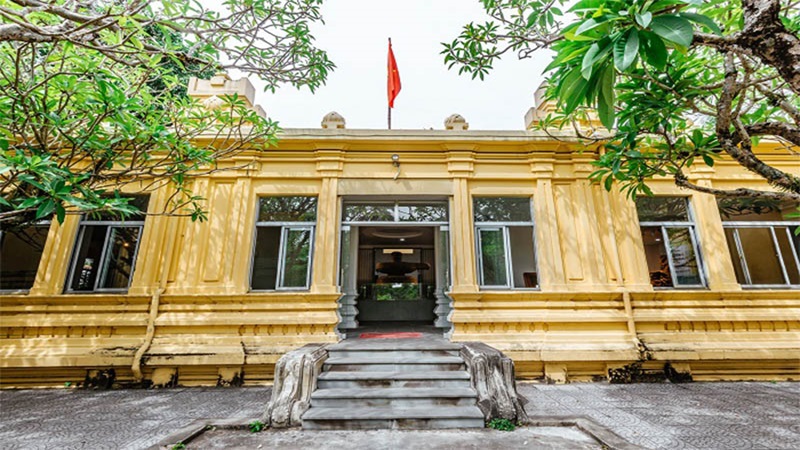
Construction began in 1915 based on the vision of French archaeologist Henri Parmentier and was completed in 1919, showcasing a distinctive European Gothic style with prominent arched and pointed roofs. The architects skillfully incorporated motifs and patterns characteristic of Champa temple architecture, creating a unique harmony between Eastern and Western elements in every detail.
The exhibition rooms are designed with open spaces and large windows to allow natural light, illuminating the artifacts optimally while creating an airy atmosphere for visitors. The museum’s grounds are surrounded by lush greenery, weathered golden walls, and the pristine white of frangipani flowers, evoking a poetic, ancient ambiance.
The artifacts are organized by their excavation sites, such as My Son, Tra Kieu, Dong Duong, Thap Mam, Quang Tri, Quang Nam, and Quang Ngai, enabling visitors to recognize the distinct characteristics of Champa art across different periods. This scientific arrangement not only facilitates understanding but also allows visitors to trace the development and transformation of Champa culture through various historical stages.
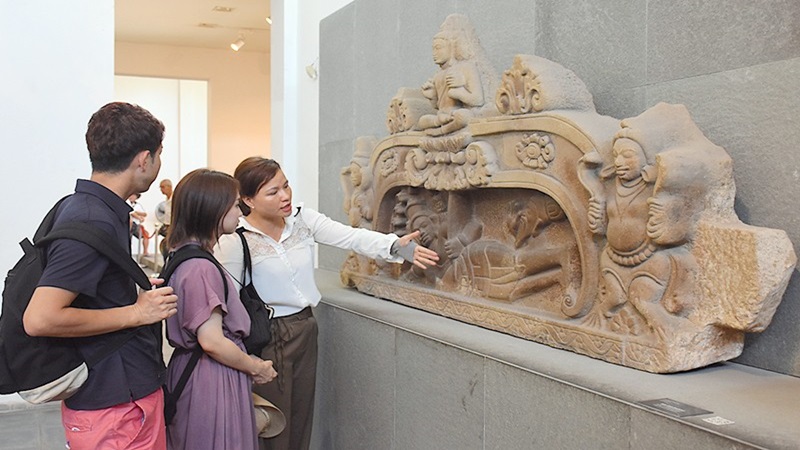
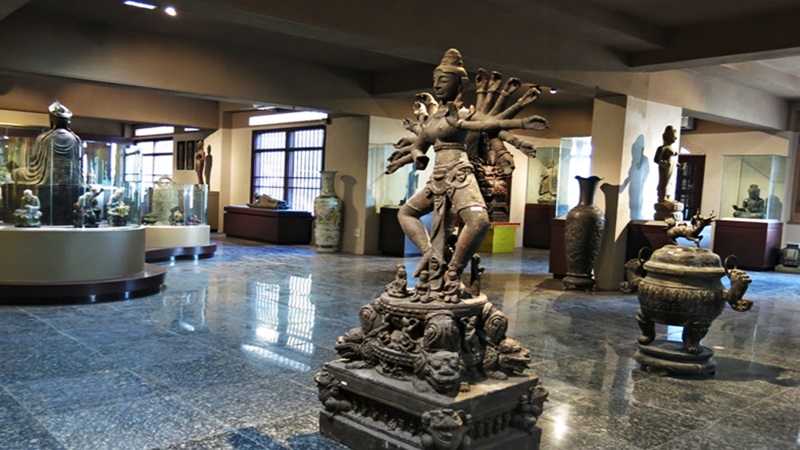
The collection primarily features Hindu deities such as Shiva—the god of destruction and rebirth, often depicted in powerful dance poses—and Vishnu, the benevolent preserver, typically holding symbols like a conch or a chakra wheel. Brahma is portrayed with multiple faces and arms, symbolizing omnipotence in ancient Hindu beliefs of the Champa people.
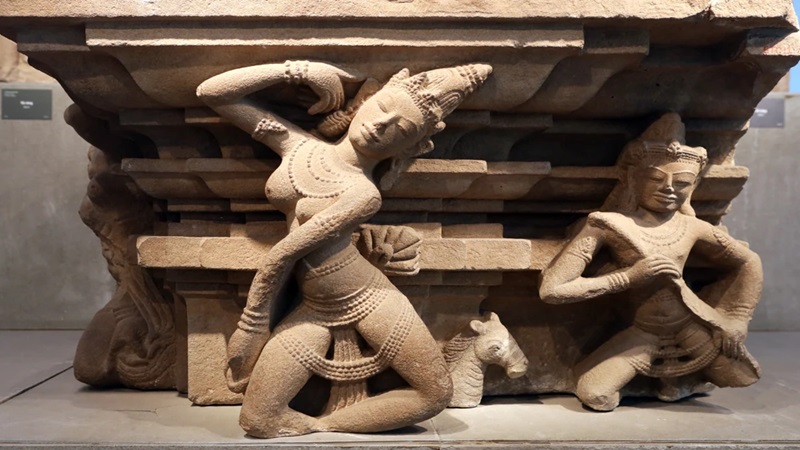
Mythical creatures also hold a prominent place in the collection, including Garuda—the giant-winged divine bird, elephants with curved trunks, and lions with mountain-like bodies, each carrying unique significance in Hindu mythology. Additionally, the museum displays statues of flute players, drummers, and dancers, offering a glimpse into the vibrant life of ancient Champa palaces.
The statue of Bodhisattva Tara holds a distinguished place as a national treasure, crafted from pure bronze over a millennium ago in the 9th-10th century Dong Duong style. Standing 1.15 meters tall, this artwork reflects the profound reverence for Avalokiteshvara (Guan Yin) in the ancient Champa faith.
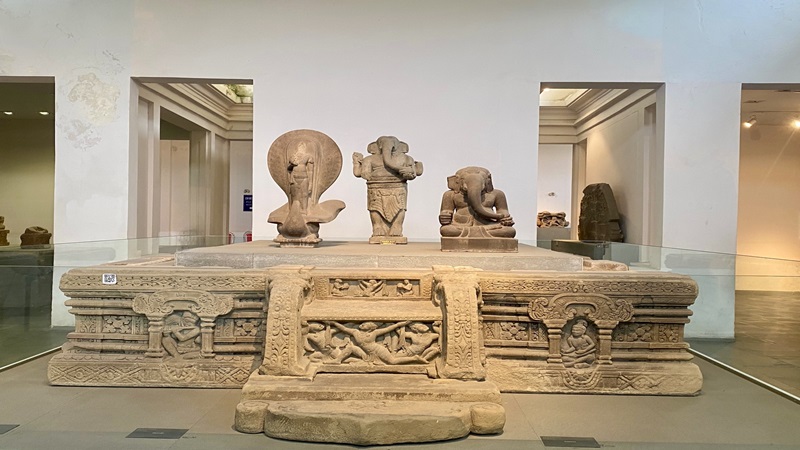
The My Son E1 altar is another remarkable piece, created in the 7th century with exceptionally intricate and vivid stone-carving techniques. Its surface depicts Vishnu resting on the divine serpent Shesha, conveying Hindu cosmological beliefs about the origin of the universe.
The sandstone statue of Ganesha, also from My Son in the 7th century, is a highly symbolic work featuring the elephant-headed god of wisdom and prosperity. Champa artisans portrayed Ganesha with both majesty and compassion, reflecting the deep spirituality of the era’s people.
The museum serves as a living history book, chronicling the glorious moments of a powerful empire that once thrived across Central Vietnam for eight centuries, from the 7th to the 15th century. The stone artworks displayed here illustrate how Champa art evolved over time, from its earliest forms in My Son to later influences from the Khmer at Thap Mam.
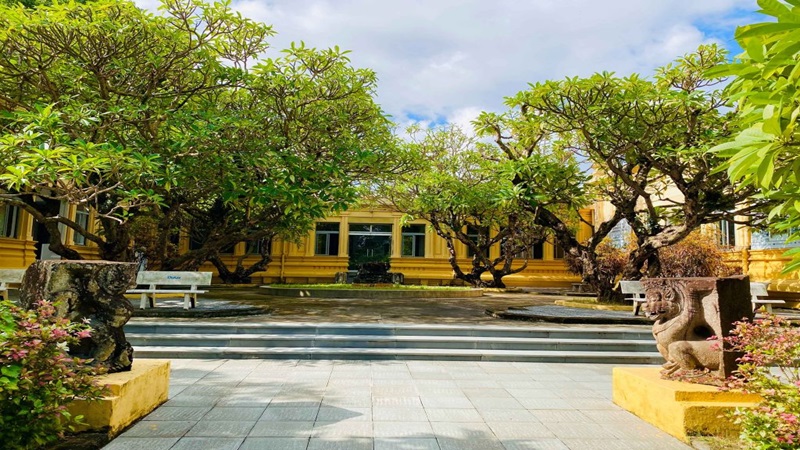
By observing these sculptures, visitors can understand the central role of Hinduism in ancient Champa life. Fascinatingly, the Champa people did not merely replicate Indian traditions but blended them with local customs, creating a distinctive Southeast Asian style.
Buddhism also reached Champa, as evidenced by Bodhisattva statues and the Dong Duong site. This openness to diverse religious philosophies is apparent. On the second floor, visitors can view Sa Huynh-Champa pottery and stone steles documenting daily life.
The museum frequently hosts traditional Champa dance performances in its courtyard, offering insights into ancient rituals and festivals. These vibrant dances, accompanied by colorful costumes and distinctive music, create memorable moments for visitors.
Since 2019, the museum has introduced a photo exhibition area showcasing modern Champa culture, bridging the past and present. Visitors can check schedules on the official website, chammuseum.vn.
Free Audio Guide System: A highlight is the free audio guide system available via Wi-Fi in Vietnamese, English, and French, allowing visitors to explore at their own pace while learning about the artifacts.
Tour Guides: For deeper insights, guided tours are available for groups at a cost of 100,000–200,000 VND. English or French tours should be booked three days in advance to ensure availability.
The museum is open daily, including holidays and Tet, from 7:30 AM–11:00 AM and 1:00 PM–5:00 PM. Admission is 60,000 VND per adult and 10,000 VND per student, a reasonable price for its cultural value.
From Da Nang’s administrative center, the museum is about 2.1–2.2 km away, a 7–9-minute drive or motorbike ride depending on traffic. Follow Tran Phu or Le Loi south, turn left at the Nguyen Van Linh roundabout, continue to the Dragon Bridge, then turn right onto 2/9 Street for about 100 meters.
From Da Nang Airport, the 3+ km journey takes 10–15 minutes by car or taxi. Exit the airport, follow Duy Tan, turn right onto Nguyen Van Linh, head to the Dragon Bridge, and turn right onto 2/9 Street.
Early mornings, when the sun rises and the air is fresh, are the best time to immerse in this cultural space. The 8–10 AM window is popular for its cool, uncrowded atmosphere. Seasonally, February to August offers dry, pleasant weather, ideal for visiting the museum and nearby My Son.
Take time to learn about the Champa kingdom’s history—from its golden age to historical upheavals. Basic knowledge of Champa’s sculptural art will enrich your visit. Bring water, especially on hot days, and a camera or phone to capture the stunning artworks.
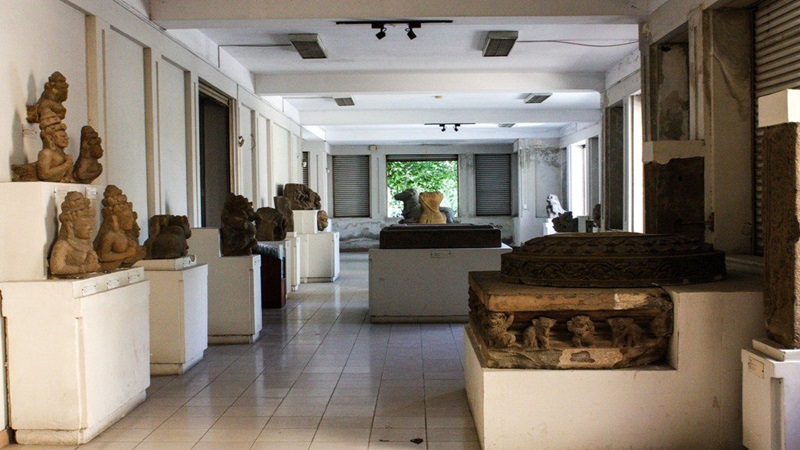
Start with the geographically organized sections to trace the evolution of Champa art across regions and eras. Read the descriptions beside each artifact for valuable details about their age, origin, and creative inspiration. Observe the intricate carvings, expressive faces, costumes, and poses of the statues, as well as their ornate details—they tell captivating stories.
These centuries-old artifacts are fragile, so protecting them is everyone’s responsibility. Do not touch any artifacts, even lightly. Maintain silence in the galleries to show respect. When photographing, disable the flash, as bright light can damage the ancient relics over time.
The Da Nang Museum of Cham Sculpture is more than a display space—it’s a living historical narrative of a brilliant civilization. Here, visitors encounter nationally recognized masterpieces and feel the vibrant pulse of the past. The museum serves as a temporal gateway, connecting the grandeur of yesteryear with today’s world while preserving and unique cultural values for future generations. Let tourvietnambest guide you to uncover the mysteries within the museum and appreciate the profound value of these centuries-old artifacts.
Total comments: 0 👇 Scroll below to view