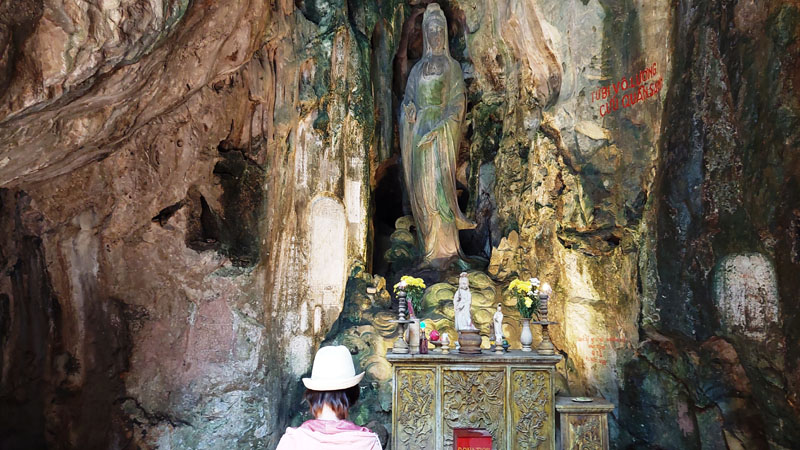
Hidden within the heart of Ngu Hanh Son, Hoa Nghiem Cave resembles a sacred world detached from the hustle and bustle of everyday life. This location not only boasts the wondrous beauty of natural caves but also serves as an intersection between spirituality and nature, creating a particularly peaceful and serene space. Come along with Tourvietnambest to explore Hoa Nghiem Cave Da Nang on your beach city travel adventure today.
Overview of Hoa Nghiem Cave in Da Nang
Hoa Nghiem Cave is considered one of the most impressive and distinctive caves in the Ngu Hanh Son scenic complex, located in Ngu Hanh Son District of Da Nang City. This place is praised as a "sacred spiritual space," attracting visitors not only for the majestic natural beauty but also for the pure and mysterious atmosphere characteristic of Buddhist holy sites.
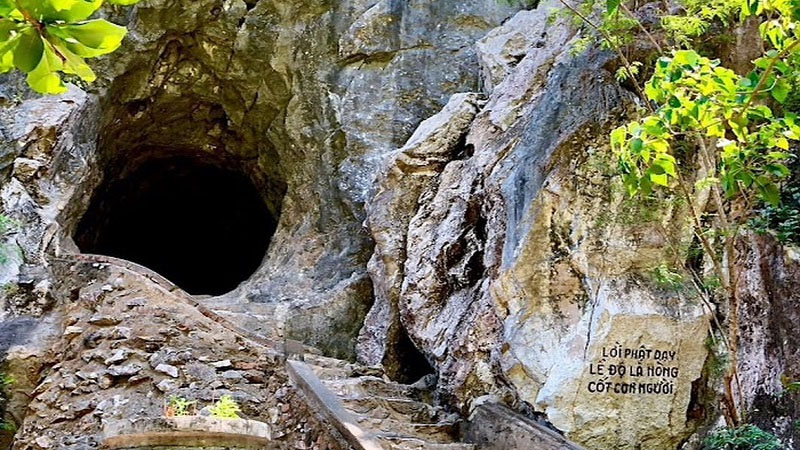
Geographical Location
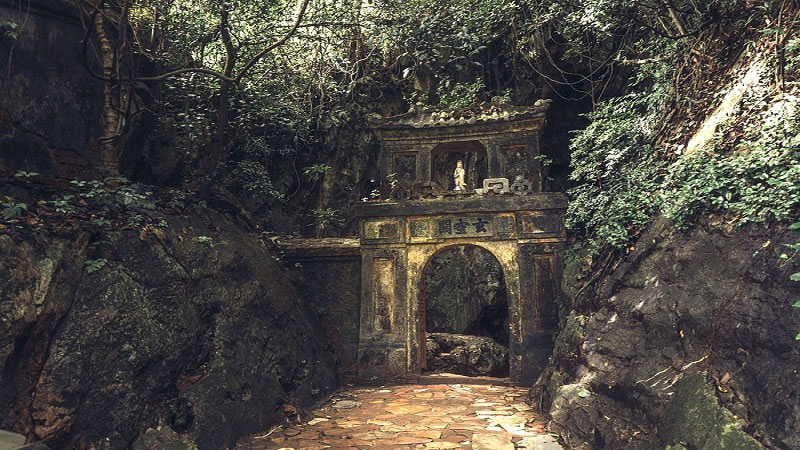
Hoa Nghiem Cave is nestled inside Thuy Son Mountain, the highest and most majestic peak in the chain of five mountains of Ngu Hanh Son. Although the entrance is relatively narrow and low, once visitors step deeper inside, they will be surprised by the spacious and airy space. The name "Hoa Nghiem" originates from the Avatamsaka Sutra (Great and Extensive Buddha Flower Garland Sutra), one of the most important scriptures in Buddhism, highlighting the close connection between this cave and spiritual life.
Natural Beauty and Sacred Architecture
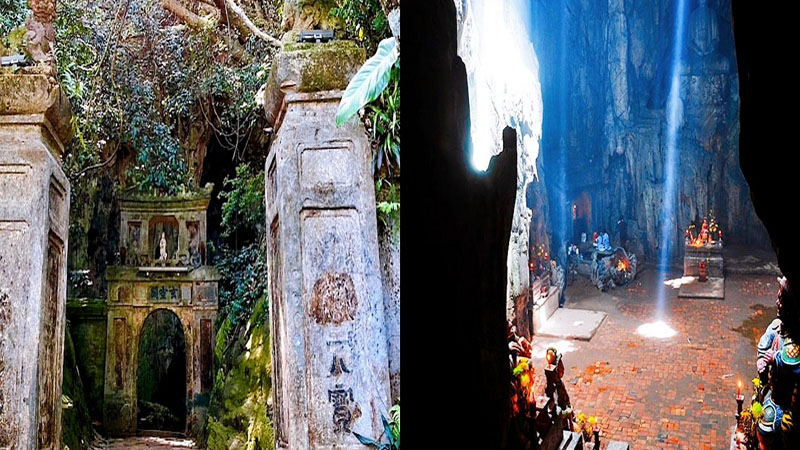
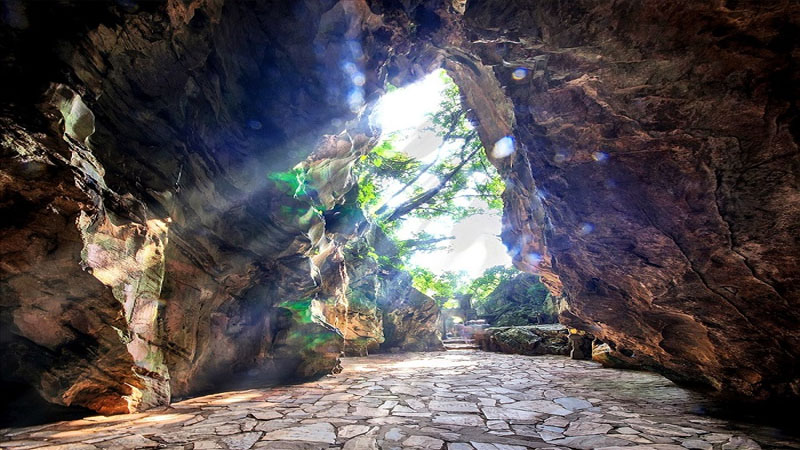
The interior area of the cave is divided into several distinct sections with different functions. The entrance is an arch-shaped cave, adorned with numerous stalactites in diverse shapes, sparkling as if covered in a layer of glistening gold. Natural light from a crack in the ceiling shines down, creating a surreal and ethereally sparkling scene.
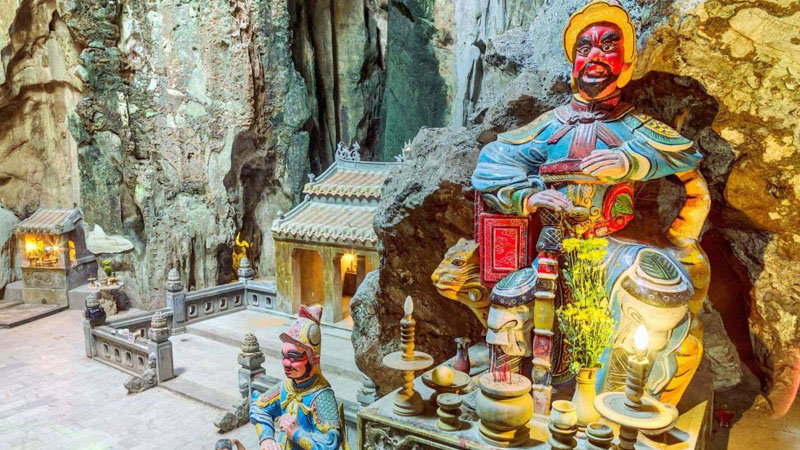
The centerpiece of Hoa Nghiem Cave is the solemn worship area, where a marble-carved statue of Avalokitesvara Bodhisattva is placed. The statue is positioned in a natural rock niche, with overhanging stalactites above like a natural canopy, creating a dignified and intimate scene. Additionally, the cave has a connecting path to Huyen Khong Cave and Linh Ung Pagoda, forming a continuous exploration area that makes it convenient for visitors to discover.
Spiritual Value
Hoa Nghiem Cave is chosen by many not only to admire the scenery but also to seek inner peace. The fresh and cool air combined with the distant sound of temple bells makes the soul feel light and relaxed. This is an ideal pilgrimage site for those wishing to pray for peace, good fortune, and tranquility in the heart.
History and Culture of Hoa Nghiem Cave Da Nang
Hoa Nghiem Cave is not merely a natural landscape but a meaningful historical and cultural spiritual heritage, closely tied to the development of Buddhism in the Ngu Hanh Son region.
Historical Imprints
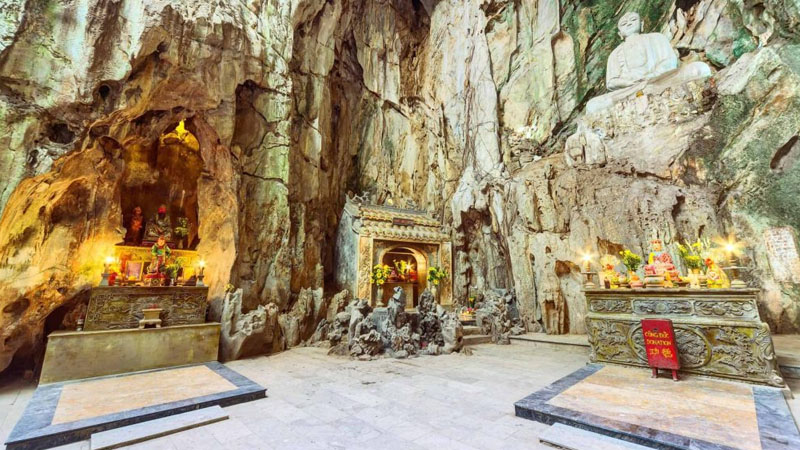
- Origin and Name: The name "Hoa Nghiem" derives from the Avatamsaka Sutra, one of the most important and profound scriptures in Mahayana Buddhism. Naming the cave after this sutra indicates that Hoa Nghiem Cave has long been an important Buddhist center, where monks, nuns, and lay Buddhists practiced, studied, and researched the teachings.
- Ancient Traces: Inside the cave is an ancient stone stele named "Phu Da Son Linh Trung Phat" inscribed in the year Canh Thin (1640). This stele records the renovation of the temple and the merits of devotees, including Vietnamese, Japanese, and Chinese people living in Hoi An at that time. This evidences the vibrant cultural and religious exchanges in the area from the 17th century.
- Wartime Period: During the resistance against the Americans, with its rugged terrain, Hoa Nghiem Cave along with other caves in Ngu Hanh Son became secret bases for soldiers and local people. This place served as a shelter, weapon storage, and a key strategic outpost in the struggle.

Culture and Spiritual Significance
- Space for Cultivation and Meditation: Hoa Nghiem Cave offers a quiet space, isolated from the outside bustle. Natural light streaming down from cracks in the rock walls, along with the cool and clean air, creates ideal conditions for cultivation and meditation.
- Spiritual Symbolism: The carved statue of Avalokitesvara Bodhisattva in the cave is a meaningful spiritual symbol. The statue's majestic and compassionate posture, holding a vase of nectar pointing toward the cave entrance, as if bestowing peace and good fortune upon all beings. This is a familiar pilgrimage spot for many Buddhists and tourists, where they come to pray for health and peace for themselves and their families.
- Cultural Convergence: Through the ancient stele "Phu Da Son Linh Trung Phat," Hoa Nghiem Cave also reflects the cultural convergence between Vietnamese, Japanese, and Chinese people in jointly building and preserving Buddhist structures. This mirrors a prosperous historical period of the Hoi An port and surrounding areas, where multiple cultures coexisted and developed.
Overall, Hoa Nghiem Cave is not only a geological wonder but also a precious treasure of history, culture, and spirituality. This place is vivid evidence of the connection between humans, nature, and faith, offering visitors meaningful and unforgettable experiences.
Directions to Hoa Nghiem Cave Da Nang
Location and Travel Distance
Hoa Nghiem Cave is located in the Ngu Hanh Son scenic area, at Hoa Khue Village, Son Thuy Hamlet, Hoa Vang District, Da Nang City. The specific location can be identified within the Ngu Hanh Son area, Da Nang. From central Da Nang City to Hoa Nghiem Cave is about 8 km southeast, with a travel time of approximately 10-15 minutes by motorbike or taxi.
Modes of Transportation and Vehicle Types
- Motorbike: This is the most popular and flexible choice for tourists. Visitors can rent a motorbike in central Da Nang for about 100,000 – 150,000 VND per day. The usual route is from the city center via Vo Nguyen Giap – Truong Sa – Non Nuoc or Le Van Hien to the Ngu Hanh Son area. The journey takes about 15-20 minutes, allowing easy stops to explore and enjoy the scenery along the way.
- Taxi or Ride-Hailing Services (Grab): This is a convenient option suitable for families or small groups, with costs from the center to the cave around 100,000 – 150,000 VND one-way, ensuring a comfortable and quick trip.
- Public Bus: There is Route No. 1 (Da Nang – Hoi An) departing from the central bus station and stopping at Ngu Hanh Son. The ticket price is only about 20,000 VND per trip, with a travel time of around 30 minutes. Suitable for tourists wanting to save costs and experience public transportation.
Estimated Costs
- Motorbike Rental: 100,000 – 150,000 VND/day
- Taxi or Grab: Approximately 100,000 – 150,000 VND/one-way
- Bus: 20,000 VND/trip
- Entrance fee to Hoa Nghiem Cave is free, however, the Ngu Hanh Son area has an entrance fee of about 40,000 VND if visiting other sites inside.
Travel Advice and Notes
Tourists should choose clear, sunny days for the best experience, avoiding rainy season trips as paths may be slippery and unsafe due to the cave's location on a high mountain peak. Avoid peak hours in the early morning or late afternoon to prevent traffic jams, especially on weekends or holidays.
Visitors need to wear modest and covered clothing when entering the cave as it is a sacred place with Buddha statues. Bring comfortable walking shoes, water, and light snacks if planning a long visit. Check the cave's opening hours for suitable travel planning, usually open all day.
Attractive Activities at Hoa Nghiem Cave
Hoa Nghiem Cave is an appealing destination with many special activities and experiences, suitable for those who love exploring nature, learning about culture, and seeking inner peace. Below are interesting activities tourists can experience here:
Worship and Prayer
- Visiting and Paying Homage to the Avalokitesvara Statue: This is the main activity and holds the deepest spiritual significance at the cave. The marble-carved Avalokitesvara Bodhisattva statue is placed in a natural rock niche, creating a sacred and solemn space. Visitors can light incense, offer rituals, and pray for prosperity and good fortune for themselves and their families.
- Learning about Buddhist Teachings: Inspired by the Avatamsaka Sutra, this is an ideal space for tourists to learn about the profound philosophy of Buddhism.
Exploring Natural Beauty and Architecture
- Admiring Stalactites and Natural Light: The beauty of Hoa Nghiem Cave lies in the abundant stalactites in rich shapes, sparkling under natural light. Light from a crack in the ceiling shines down, creating a mystical and ethereally sparkling scene like a fairyland.
- Exploring Historical Relics: Inside the cave is the ancient stone stele "Phu Da Son Linh Trung Phat" inscribed in 1640. This is a valuable artifact helping visitors learn about the history of formation and cultural exchanges in the area from centuries ago.

Visiting Tips for Hoa Nghiem Cave Da Nang
Optimal Timing
- Time of Year: Tourists can visit Ngu Hanh Son at any time of the year as the climate here is quite cool. However, the best time is the dry season (from February to August). During this period, the weather is dry and sunny, very convenient for mountain climbing and cave exploration. Avoid going during the rainy season (late October to November) as mountain paths may be slippery.
- Time of Day: To avoid intense sun and crowds, visitors should go in the early morning (around 7 AM - 9 AM) or cool afternoon (after 3 PM).
Clothing and Essential Items
- Clothing: Hoa Nghiem Cave is a sacred worship site, so tourists need to wear modest and covered clothing. Opt for long pants or knee-length skirts and sleeved shirts.
- Footwear: Paths in the Ngu Hanh Son complex are mostly mountain roads with many stone steps that can be slippery. Therefore, wear sports shoes or non-slip flats for safety and comfort.
- Other Items:
- Drinking Water and Light Snacks: Exploring caves and pagodas may take time, so bring water to avoid fatigue.
- Hat and Sunscreen: Essential if traveling in summer.
- Cash: Prepare some small bills for tickets or souvenirs.

Nearby Attractions to Hoa Nghiem Cave Da Nang
Hoa Nghiem Cave is located within the Ngu Hanh Son scenic complex, so visitors can easily combine visits to many other sites:
Connection to Huyen Khong Cave: Hoa Nghiem Cave has a connecting path to Huyen Khong Cave, the cave praised as the most beautiful and mystical in Ngu Hanh Son. After exploring the serenity of Hoa Nghiem Cave, visitors can continue to Huyen Khong Cave to admire the overwhelming beauty and special architecture here.
Visiting Tam Thai Pagoda: The entrance to Hoa Nghiem Cave is near Tam Thai Pagoda, an ancient and solemn temple. Visitors should stop by the pagoda before or after exploring the cave to fully feel the spiritual space of Ngu Hanh Son.
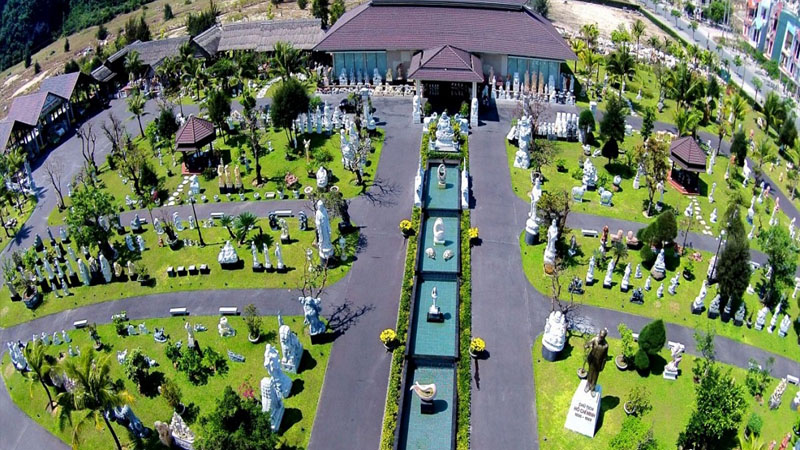
Non Nuoc Stone Carving Village: Located at the foot of Ngu Hanh Son Mountain, this traditional craft village is where tourists can find exquisite marble sculptures, shop for souvenirs, or watch artisans at work.
Hoa Nghiem Cave is an unmissable destination when exploring Ngu Hanh Son. This place is not only a natural masterpiece with the mysterious beauty of stalactites and cave systems but also a sacred, serene space. Stepping into Hoa Nghiem Cave, you will immerse yourself in the intersection between Buddhist faith and the beauty of creation, bringing a deeply impressive and profound experience.
With a team of experienced, enthusiastic, and locally knowledgeable guides, we commit to providing dedicated, transparent, and reliable services. Tourvietnambest always prioritizes customer satisfaction as the measure of value and motivation for growth.